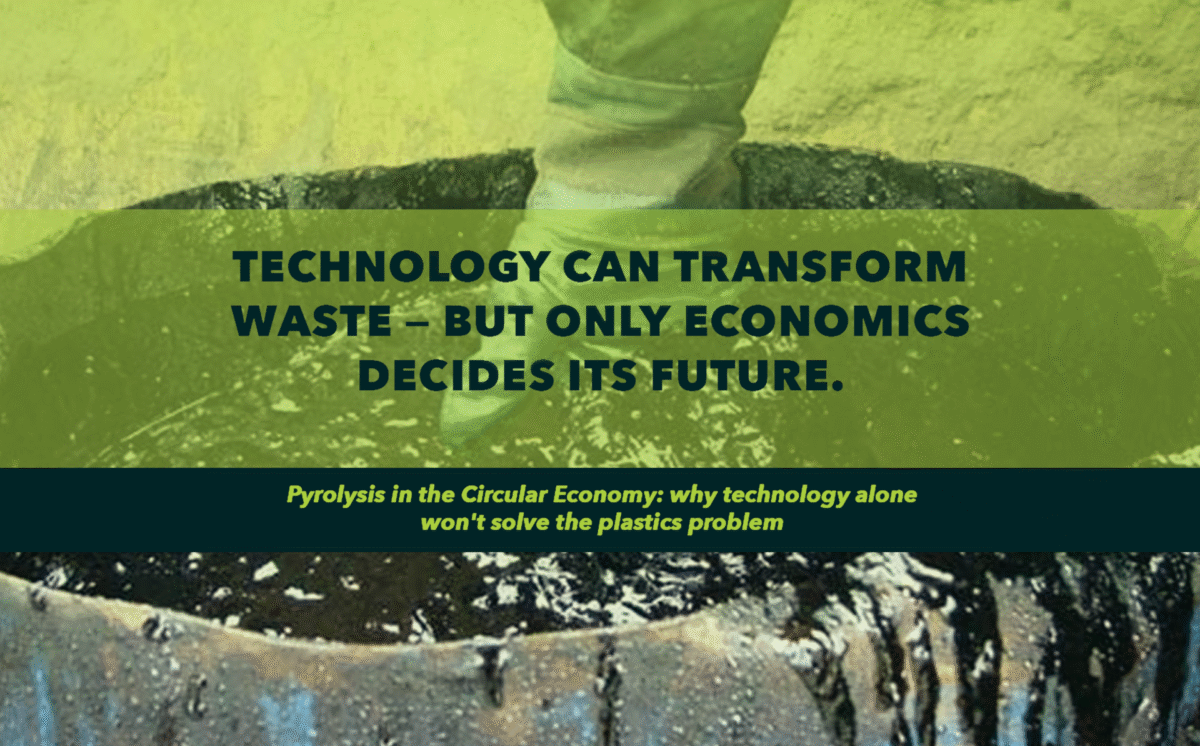

Pyrolysis in the Circular Economy: why technology alone won’t solve the plastics problem.
Chemical recycling technologies like pyrolysis are gaining attention as potential solutions for hard-to-recycle plastics. But before jumping on the bandwagon, buyers of recycled materials need to understand the full picture.
What Pyrolysis Actually Does:
Pyrolysis breaks down plastic waste (PE, PP, PS) through high-temperature heating in oxygen-free environments, converting it into three products: liquid oil (for fuel or chemical feedstock), syngas (process fuel), and solid carbon residue. The goal is to handle contaminated or multi-layer plastics that mechanical recycling can’t process.
The Reality for Material Buyers:
If you source recycled plastics as raw materials, here’s what pyrolysis means for your supply chain:
– Energy Economics Are Challenging – The process requires significant thermal energy (300-650°C) to break molecular bonds. While syngas can offset some costs, the net energy balance often makes pyrolysis-derived materials more expensive than virgin plastics when oil prices are low.
– Quality Variables – Impurities (nitrogen, chlorine from PVC) contaminate the output oil, requiring expensive upgrading processes. The final product quality varies significantly based on feedstock consistency.
– Market Competitiveness – Virgin plastic producers have economies of scale and established infrastructure. Pyrolysis oil competes directly with petroleum prices—a volatile benchmark that doesn’t account for environmental externalities.
-Niche Applications Exist – Where mechanical recycling fails (contaminated streams, multi-material packaging) and regulatory pressure is high, pyrolysis fills a gap. Some companies are finding success in specialized applications beyond replacing virgin plastics.
Technology can solve technical problems, but economic problems require economic solutions. As material buyers, watch for:
-Regulatory signals – Countries investing in chemical recycling infrastructure through subsidies or mandates are creating future supply opportunities
-Honest suppliers – Pyrolysis operators transparent about energy costs, output quality, and process limitations are better long-term partners than those overselling capabilities
-Diversified applications – Companies exploring pyrolysis oil for industrial heating or chemical feedstock (not just virgin plastic replacement) may have more viable business models
-Hybrid systems – The future likely combines mechanical recycling (for clean streams) + chemical recycling (for contaminated streams), not one replacing the other
Pyrolysis is a tool, not a silver bullet. It expands what’s technically possible in waste management, but profitability depends on policy frameworks that haven’t fully materialized yet.
For material buyers: Don’t dismiss chemical recycling, but don’t bet your supply chain on it either until the economics align. The technology works—the question is whether governments will create conditions where it can compete.