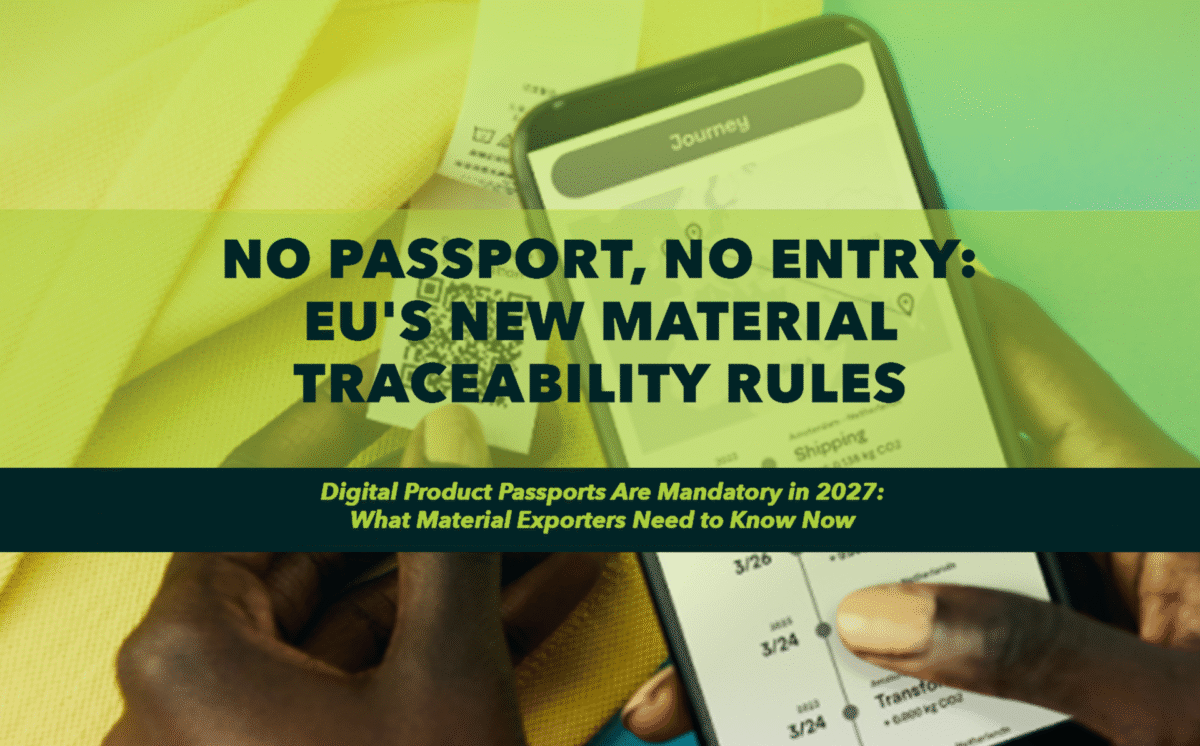

Digital Product Passports Are Mandatory in 2027: What Material Exporters Need to Know Now
If you export recycled materials to Europe, your business model is about to change fundamentally. The EU’s Digital Product Passport (DPP) isn’t just another compliance checkbox—it’s a complete transformation of how material traceability works in global trade.
What Is the Digital Product Passport?
Think of it as a digital ID card that travels with physical products throughout their entire lifecycle. Accessible via QR codes, RFID, or NFC tags, the DPP contains verified data on:
Material composition and origin
Recycled content percentage
Carbon footprint
Presence of hazardous substances
Dismantling instructions and recyclability
This system was established under the EU’s Ecodesign for Sustainable Products Regulation (ESPR), approved in April 2024.
Implementation Timeline—Mark These Dates:
→ February 18, 2027: Mandatory for all industrial batteries, EV batteries, and portable batteries >2kWh sold in the EU
→ 2027 (Phase 1): Priority sectors including textiles, tires, and detergents
→ 2028-2029: Expansion to steel, aluminum, consumer electronics, and furniture
→ 2030: Nearly all physical products sold in the EU will require a DPP
What You Need to Start Doing:
→ Audit your data collection – What information do you currently track about material sources, processing, and composition? Identify gaps.
→ Evaluate technology partners – Research platforms that offer DPP-compliant data management. GS1 Digital Link, blockchain providers, and industry-specific solutions.
→ Engage your supply chain – Your suppliers need to provide verified data upstream. Start those conversations now—implementation takes months, not weeks.
→ Contact European buyers – Ask what specific DPP requirements they’ll need. Different sectors have different data priorities.
→ Consider pilot programs – Don’t wait for mandatory deadlines. Run pilot programs with one product line or one major customer to learn the system.
The Digital Product Passport isn’t just EU bureaucracy—it’s the infrastructure that makes circular economy scalable and trustworthy. Materials can’t circulate efficiently without transparent information.